Pump Solution for Chemical Wastewater Transfer
Reliable Pump Solution for Corrosive and Mixed Wastewater
Chemical wastewater is often more complex than clean water or single chemical liquids. It may contain acid, alkali, salts, organic chemicals, suspended solids, crystals or mixed corrosive liquids. Therefore, pump selection should consider not only flow and head, but also liquid composition, pH value, temperature, solids content, material compatibility and sealing requirements.
Sino Industrial Equipment supplies corrosion-resistant pump products for chemical wastewater transfer, wastewater treatment, industrial process liquid circulation and corrosive liquid handling applications. We support end users, pump distributors, pump service companies, water treatment contractors and engineering partners with practical pump selection support.
Common Chemical Wastewater Applications
Chemical wastewater transfer pumps are commonly used for:
- Chemical plant wastewater
- Electroplating wastewater
- Acid and alkali wastewater
- Industrial cleaning wastewater
- Metal surface treatment wastewater
- Pesticide production wastewater
- Water treatment systems
- Environmental protection projects
- Chemical storage and transfer systems
- Process wastewater circulation
Why Chemical Wastewater Pump Selection Is Different
Chemical wastewater pump selection is different because the liquid condition is often unstable. The composition may change according to production process, cleaning cycle, concentration variation or upstream treatment method.
The pH value may also be unstable. Some wastewater may be strongly acidic or alkaline, while other wastewater may contain mixed chemicals that increase corrosion risk. Because of this, pump material selection cannot be decided only by the liquid name.
Solids, particles or crystals may exist in wastewater. These materials can affect impeller clearance, wear parts, sealing life and pump reliability. If crystallization may occur, the pump structure, pipeline condition and possible flushing or insulation arrangement should be reviewed carefully.
Seal and gasket materials should also be checked carefully. A pump casing material may be suitable, but unsuitable sealing parts may still cause leakage or early failure.
Recommended Pump Types for Chemical Wastewater Transfer
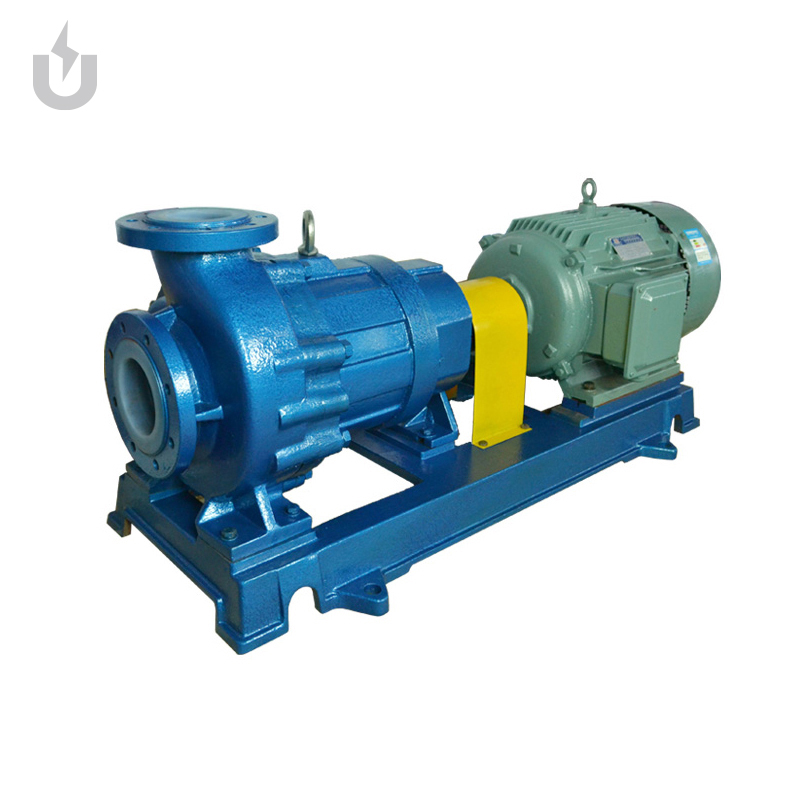
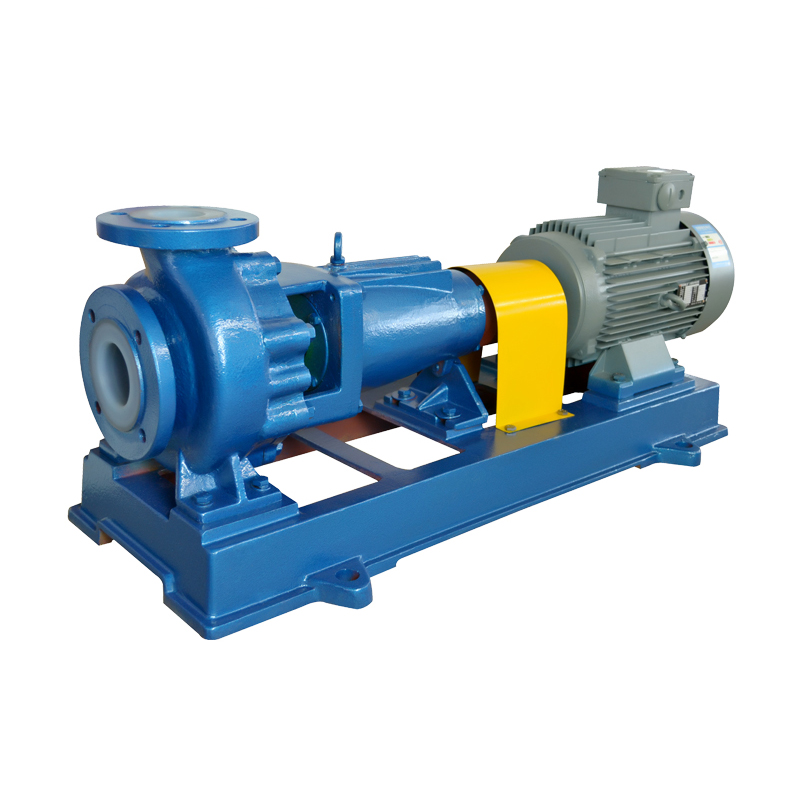
Chemical Centrifugal Pump
Chemical centrifugal pumps are commonly used for continuous transfer, larger flow capacity and general chemical wastewater handling applications. They can be considered when the wastewater condition is relatively stable and the site has regular maintenance capability.
Chemical centrifugal pumps may be suitable when:
- The flow rate is relatively large
- The wastewater condition is stable
- Continuous transfer is required
- Mechanical seal or packing seal design is acceptable
- A practical and cost-effective pump solution is needed
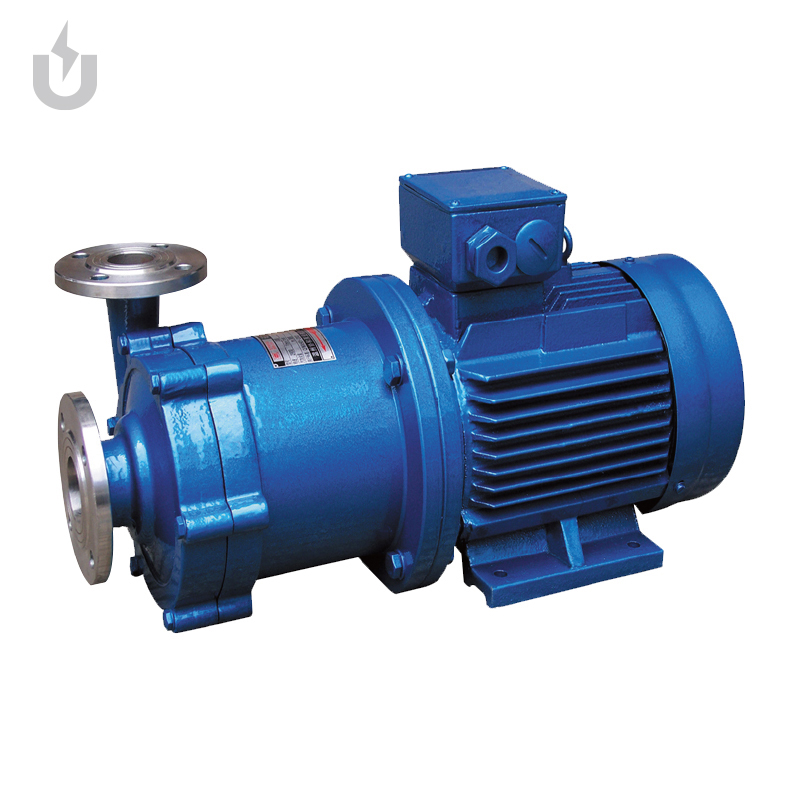
Magnetic Drive Pump
Magnetic drive pumps are often selected when leakage control is important. Their seal-less design helps reduce the risk of traditional shaft seal leakage, which can be useful for corrosive wastewater, hazardous liquids or wastewater containing strong chemical components.
Magnetic drive pumps may be suitable when:
- Leakage control is important
- The wastewater is corrosive or hazardous
- The site requires cleaner operation
- The liquid does not contain large amounts of hard particles
- The flow rate and head are within the suitable range
Vertical / Submerged Pump
Vertical submerged pumps can be considered for wastewater tanks, pits, sumps or applications where the liquid level is lower than the pump inlet. This type of pump can be useful when the installation condition is limited or when the pump needs to work with a tank or collection pit.
Vertical or submerged pumps may be suitable when:
- Wastewater is stored in a pit or tank
- The pump inlet position is higher than the liquid level
- Space is limited around the tank
- The liquid level changes during operation
- A vertical installation arrangement is preferred
For wastewater unloading or tank transfer applications, self-priming pumps may also be reviewed according to installation conditions and liquid properties.
Material Selection for Chemical Wastewater Pumps
Material selection should be based on wastewater composition, pH value, temperature, solids content and operating environment.
Common material considerations include:
- Fluoroplastic pumps or lined materials may be suitable for corrosive mixed wastewater
- Stainless steel pumps can be used only when compatibility is confirmed
- Sealing materials and gasket materials should be selected according to actual liquid composition
- If particles or crystals are present, pump structure and wear parts need careful review
- Final material selection should be based on composition, pH, temperature and solids content
For wastewater containing oxidizing chemicals, sodium hypochlorite or other disinfecting liquids, a related sodium hypochlorite transfer pump solution may also be reviewed. For alkaline wastewater or caustic liquid handling, an alkali transfer pump solution can help compare material and pump type selection.
Important Operating Notes
Chemical wastewater should not be treated as normal clean water. Even when the flow rate and head are clear, the liquid composition and corrosion risk may have a major influence on pump selection.
For magnetic drive pumps, hard particles or ferromagnetic impurities should be avoided. If particles exist, filtration or a more suitable pump structure may be required.
Long-term low-flow operation should also be avoided. Operating far below the recommended flow range may cause heat, vibration or pump damage.
If crystallization is possible, insulation, flushing arrangement or periodic cleaning may be considered according to the actual working condition.
For replacement projects, existing pump nameplate, model, inlet and outlet size, flange standard, installation dimensions and site photos are important for quotation and pump selection.
Information Needed for Pump Selection
To recommend a suitable chemical wastewater pump, please provide the following working conditions:
- Wastewater composition
- pH value
- Temperature
- Flow rate
- Head
- Solid content
- Particle size
- Density
- Viscosity
- Whether the liquid is corrosive, toxic or volatile
- Installation condition
- Seal requirement
- Motor voltage and frequency
- New project or replacement pump
- Existing pump nameplate, photos or drawings if available
Typical Industries
Chemical wastewater transfer pumps are commonly used in:
- Chemical processing
- Water treatment
- Wastewater treatment
- Electroplating
- Metal surface treatment
- Pesticide production
- Environmental engineering
- Industrial cleaning
- Mining and metallurgy
- Chemical storage and transfer systems
Partner Support for Chemical Wastewater Pump Projects
Sino Industrial Equipment supports local pump distributors, pump service companies, industrial equipment suppliers, water treatment contractors and engineering partners with pump selection, technical documents, quotation support, OEM support, spare parts supply and online technical communication for chemical wastewater pump projects.
For overseas markets, local communication and service capability are important. We welcome partners who work with chemical plants, wastewater treatment projects, environmental engineering companies and industrial equipment users.
If your customers need pumps for chemical wastewater, corrosive liquid transfer, wastewater treatment or mixed chemical applications, our team can help evaluate the working conditions and recommend suitable pump options.
FAQ
What pump is suitable for chemical wastewater transfer?
The suitable pump depends on wastewater composition, pH value, temperature, flow rate, head, solids content, particle size and leakage control requirement. Chemical centrifugal pumps, magnetic drive pumps and vertical submerged pumps may all be considered according to the working condition.
Can magnetic drive pumps be used for chemical wastewater?
Yes, magnetic drive pumps can be considered when leakage control is important and the liquid condition is suitable. However, particles, crystals, ferromagnetic impurities, temperature and chemical compatibility should be confirmed before selection.
How to choose pump material for corrosive wastewater?
Pump material should be selected according to actual wastewater composition, pH value, temperature, solids content and operating environment. Fluoroplastic, lined materials or stainless steel may be considered only after compatibility is confirmed.
What information is needed before quoting a wastewater pump?
Before quotation, the supplier should confirm wastewater composition, pH value, temperature, flow rate, head, solids content, particle size, density, viscosity, installation condition, seal requirement, voltage, frequency and whether it is a new project or replacement pump.
Is chemical wastewater pump selection different from clean water pump selection?
Yes. Chemical wastewater may contain corrosive liquids, mixed chemicals, particles, crystals or changing pH value. Pump selection should consider material compatibility, sealing structure, solids handling and operating condition, not only flow rate and head.
Need a Pump Solution for Chemical Wastewater Transfer?
If you are looking for a pump solution for chemical wastewater transfer, wastewater treatment, corrosive liquid handling or industrial process wastewater circulation, please send us your working conditions.
Our team can help review the liquid composition, pH value, temperature, flow rate, head, solids content, installation condition and sealing requirement before recommending a suitable pump solution.
